
The lotus flower tower that blooms amidst Tokyo's historical heart.
Building in Minato-ku, Tokyo, Japan.
Visitor Guide
Visit the adjacent Seishoji Temple first; the tower's 'blooming' profile was specifically designed to mirror the temple's lotus symbolism.
From the temple courtyard, where you can frame the ancient wooden gate against the curved, metallic facade of the tower.
The towers (Mori Tower and Forest Tower) are primarily offices and residences; the lobby and temple grounds are public.
Pelli used a 'blooming' profile not just for aesthetics, but to minimize wind resistance at high altitudes, a constant Tokyo challenge.
1 hour
Design & Structure
Modeled using wind-tunnel simulations and parametric optimization to ensure the curved profile remained structurally efficient.
Aluminum cladding and high-performance glass; the color palette was chosen to complement the temple's wood and stone.
The towers utilize a core-and-shell system where the exterior curvature is managed through variable-length steel beams.
See Together
Buildings that pair well with Atago Green Hills — they're nearby or share a compelling architectural conversation.


More by César Pelli
View all →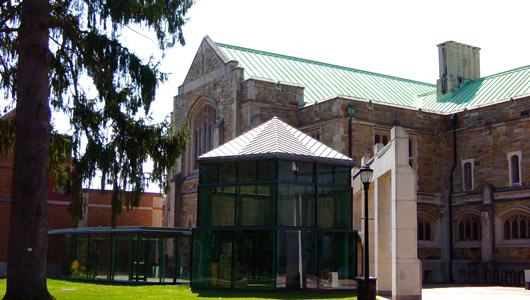
Frances Lehman Loeb Art Center

Minneapolis Central Library
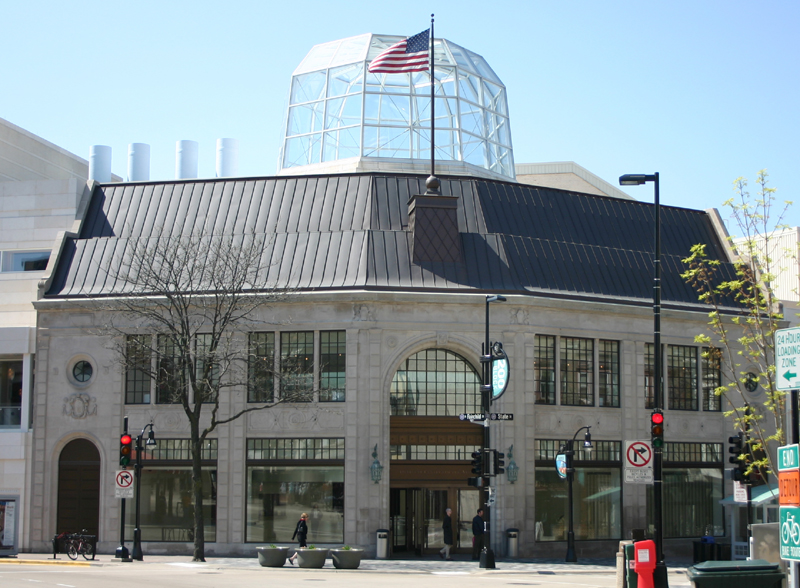
Overture Center for the Arts

Pacific Design Center

Clorox Building

National Museum of Art, Osaka
Frequently Asked Questions
Who designed Atago Green Hills?+
Atago Green Hills was designed by César Pelli and completed in 2002. It is located in Atago, Japan.
Where is Atago Green Hills located?+
Atago Green Hills is located in Atago, Japan. Its coordinates are 35.6621°, 139.7489°.
When was Atago Green Hills built?+
Atago Green Hills was completed in 2002. It was designed by César Pelli.
Can I visit Atago Green Hills?+
Atago Green Hills is a real building in Atago that can be viewed from the outside. Check local information for interior access and visiting hours. Use the Parametric Atlas walking tour feature to plan a route that includes this building.