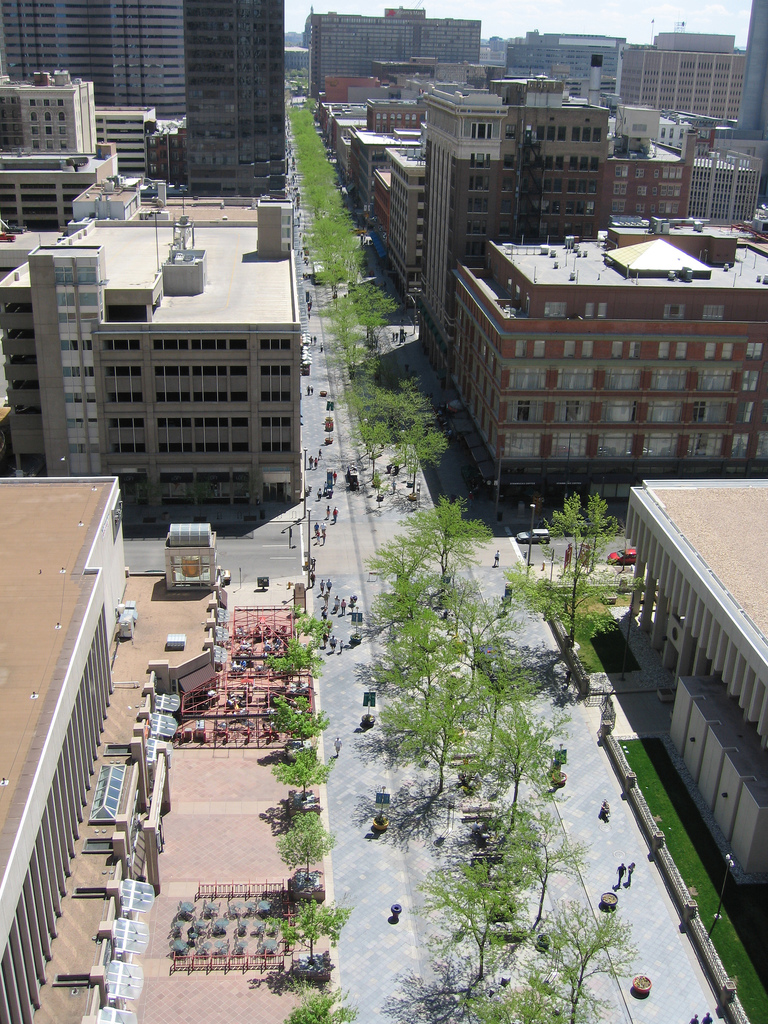
An urban room stretched for blocks—Pei’s calm geometry turning downtown Denver into a walkable diagram.
Pedestrian and transit mall in Denver, Colorado, United States.
Featured in I. M. Pei's definitive monograph, I.M. Pei: Complete Works.
Visitor Guide
Walk it twice: once in the middle (for the long perspective), then along the edges (for storefront rhythm and paving pattern).
Centerline of the mall near a major cross street, blue hour for a clean ribbon of lights and receding perspective.
Public outdoor space; open 24/7. Shops and venues vary by tenant.
It’s less about buildings than about section: the mall’s success lives in curb-free continuity, paving logic, and how it choreographs crossings.
45–90 minutes
Design & Structure
Urban-design methodology: repeatable paving modules, street furniture as a system, and long-axis perspective control rather than object-form.
Hardscape (pavers, stone/concrete) designed to survive snow, grit, and foot traffic without losing legibility.
Not structural bravado—civil engineering, drainage, and durability details are the real intelligence.
More by I. M. Pei
View all →
Louvre

State University of New York at Fredonia
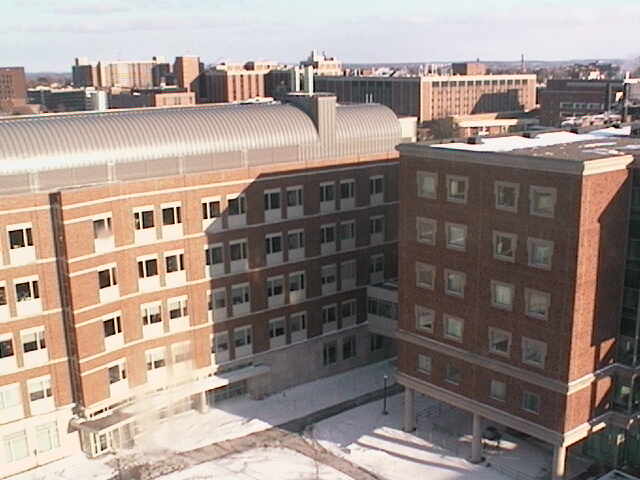
University of Rochester

Cornell University
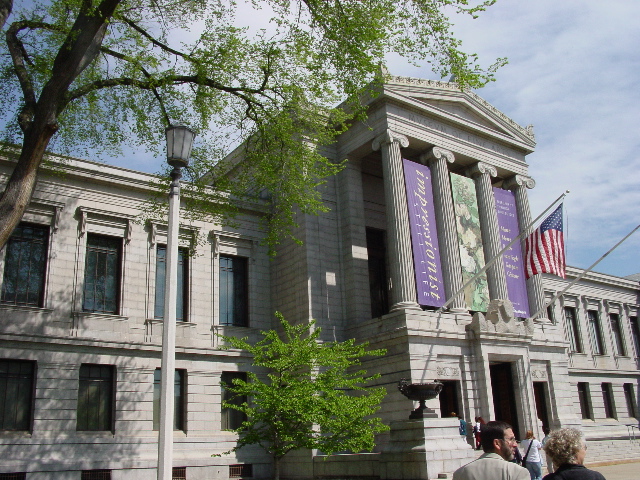
Museum of Fine Arts, Boston

Syracuse University
Nearby in Denver


Frequently Asked Questions
Who designed 16th Street Mall?+
16th Street Mall was designed by I. M. Pei and completed in 1982. It is located in Denver, United States.
Where is 16th Street Mall located?+
16th Street Mall is located in Denver, United States. Its coordinates are 39.7486°, -104.9970°.
When was 16th Street Mall built?+
16th Street Mall was completed in 1982. It was designed by I. M. Pei.
Can I visit 16th Street Mall?+
16th Street Mall is a real building in Denver that can be viewed from the outside. Check local information for interior access and visiting hours. Use the Parametric Atlas walking tour feature to plan a route that includes this building.