
California Academy of Sciences
Natural history museum in San Francisco.

De Young Museum
Fine arts museum located in San Francisco's Golden Gate Park.
Saluhall
In collaboration with Ingka Centres and KERB, Saluhall is an ambitious, plant-forward project in San Francisco, USA. Opened in April 2024 at Ingka Centres’ meeting place on 945 Market Street, San Francisco, the site hosts multiple local vendors across two floors of 2.500 sq m (23.000 sq ft) with a spread of in-house food offers and three bars featuring local craft beer and wine. Saluhall aims for 80% plant-based offer coming from an exciting selection of local food and drink producers & traders. A destination for people to meet, relax, play and try new things. Saluhall is a celebration of Scandinavian food principles that nourish both body and soul. Embracing the ethos of a progressive city, Saluhall is more than a food hall, it is a community, a meeting and eating place that unites local vendors and inspires conscious food choices Saluhall is a new kind of food hall an exciting place to eat, drink and explore in the heart of San Francisco. Showcasing five Bay Area restaurateurs, an in-house bakery, burger bar, soft serve shack, three bars and, for those who dream of stepping to the other side of the pass, a unique, community-focused cooking school to inspire the next great bakery aficionados of the future. Saluhall originates as a Swedish brand, opening for the first time in the USA, with a very regional Californian, multicultural group of chefs and food makers. More than a food hall, Saluhall is a culinary destination, a crossroads of eclectic food experiences, with a variety of perspectives on plant-forward and more sustainable food options and this mix of cultures and perspectives create an inclusive, open and warm atmosphere. Saluhall aims to transform the traditional food hall experience and is rooted in a dedication to: ● Spotlighting local food, drink and people ● Broadening the platform for global thought leadership on ingredient sustainable sourcing and cooking education ● An ambitious commitment to offering more exposure and opportunities for a plant-forward way of life for many people The Saluhall Cookery Skola is a cooking school in the heart of the vibrant food hall. The school is a warm and inviting community space that celebrates the diverse flavours and food cultures of Nordic heritage and the San Francisco Bay Area. By understanding where food comes from, cooks not only gain a deeper appreciation for the agricultural processes but also sow the seeds of greater awareness. Being conscious of the origin of food and mastering culinary skills helps all to understand the importance of food in a social context empowering better informed and meaningful food choices. Saluhall works to hire hyper-locally from the Mid-Market District & through the City of San Francisco's Office of Economic & Workforce Development (OEWD) program for disadvantaged populations. Saluhall have hired 8 new team members via the OEWD. An 19 additional staff were were recruited for the opening, with a total of 27 when Saluhall opened in April. In total about 1/2 of staff will be recruited via this programme.

Cathedral of Saint Mary of the Assumption (San Francisco)
Church in San Francisco, California, United States.

Yerba Buena Center for the Arts
Contemporary arts center in San Francisco, California.

Contemporary Jewish Museum
Museum in San Francisco, California.
Wild Civility
Embracing the paradox of the human condition is to look at what seems to be conflicted opposites and to see only harmony. Wild Civility approaches this dynamic as a poetic study in a classically serene minimalism set against the wildness of nature. This pairing is done through the idea of creating a simple moment, a space, a place for thoughtful repose within the untamed richness of nature. The design contrasts the organic and expressive qualities of a 100-year-old garden with the minimalist elegance of a simple metal deck. The footprint is a modest 90 square-foot platform that extends beyond the rear addition of a one-bedroom home in San Francisco. The original small deck was a plain concrete extension to the foundation of the house. In a modern reference to the tea houses at the Katsura Imperial Gardens in Tokyo, the first texture is that of long stripes of wood grained porcelain tile, with the second layer consisting of a fine horizontal surface of aluminum grating, which provides an openness in transition to the garden, while the third layer increases this openness with thin stainless-steel rods that offers a delicate frame from which to view the garden. Every part of the metal deck has been carefully studied to maximize simplicity, economy, and formal clarity with the intention to make cold steel sing like music with Zen-like calm and grace. The minimalist design uses tapered vertical plates as posts with laser-cut tear drop details, open aluminum grating and horizontal stainless-steel rods, reminiscent of musical scores, to allow for a permeable delicacy that provides an open view of the garden and permits natural light to filter down thru the deck to the garden below.
Transamerica Pyramid Center
The biggest renovation in the building’s 50-year history, the project gives a new lease of life to one of the city’s most recognizable landmark towers and revitalizes the historic Transamerica Redwood Park at its base. The practice was appointed by SHVO, the luxury real estate development and investment firm. Located in one of the world’s premier gateway cities, and a symbol of San Francisco’s ambition, the Transamerica Pyramid Center encompasses an entire city block in the Financial District. Designed by the celebrated futurist architect William Pereira and completed in 1972, it is emblematic of the city skyline. The tower’s lobby has been redesigned to emphasize the building’s powerful structural rhythm. A forensic study of the original building blueprints showed a spectacular diagonal structure, which was hidden above the ceiling. This structure has been revealed and clad to match the building’s exterior, creating a seamless transition between inside and outside. The full height of the lobby is restored, with a soaring glass façade that brings light deep into the space and reconnects office tenants and visitors with their serene natural surroundings. Complete with a café, florist and bookshop, the lobby reflects the spirt of the local neighborhood, and provides a sense of calm and wellbeing from the moment of arrival. The refined material palette of oak, marble and terrazzo was selected to align with Pereira’s original design. At the rear of the lobby space, the tower’s Annex has been restored – with new skylights and glazing – to fill the space with natural light and provide spectacular views of the park. The lobby and amenity levels are reimagined as elevated hospitality spaces, with an emphasis on quality and comfort. Incentivizing the return to the office, a fitness center and sky lobby are located at the middle of the tower – offering a state-of-the-art gym, sauna and yoga studios, as well as high-quality spaces for work and relaxation with panoramic city views. The tower is topped by an exclusive bar for office tenants. Transamerica Redwood Park – which consists of nearly 50 mature redwood trees transplanted from the Santa Cruz Valley to the site in 1974 and now over 100 feet tall – has also been upgraded and additional landscape activates the site perimeter. Adding seasonal color to the space, Mark Twain Alley – the alleyway from Sansome Street – is lined with eastern red bud trees, leading up to the base of the Transamerica Pyramid featuring curated cafés, shops and restaurants. The practice has also refurbished Two Transamerica’s lobby space, stripping away more recent additions to express the original structure and enhance connections with the park.
Cloudscape
Skylines are what identify cities on the horizon. A single line can describe the peaks and valleys of any settlements where human beings have invested logistically and symbolically in their cities. Our eyes follow that artificial contour to know where the city is instantly. Being recognizable in the urban fabric is a point of pride. These are the architectural ambitions of an enlightened patronage committed to leaving long term positive traces on the land, both prosaic and existential. To be emotionally consequential to the life of people, places need to speak to the inner self. It follows that the architecture's iconography is pivotal in determining long-term memory. Within the profession of Architecture, there are few places where the dynamic tension between the poetic and the pragmatic come to fore, with such vigor than the typology of the high-rise. Typically, tall and slender, these forms offer the opportunity to soar, literally “in the clouds,” and when they are designed at their best, they create an emotional presence. They give an urban skyline its character, and in a sense, they form a symbol of what a city culturally is and what it aspires to be, and where it sees the future. Each structure has the opportunity to contribute its part, as all buildings do, but because of their sheer scale and the fact that hi-rises are often seen from long distances their design carries a greater burden to react to the physical and cultural conditions of its time. Sometimes this can take the form of standing out, of creating an icon, it can also responsibly blend in. Each project must consider what might this gift to the city be. Cloudscape, as the name implies, takes the abstracted form of cumulus clouds as its symbolic reference. This has two origins, the first is a reference to the natural world, to the fog and mists that permeate the city of San Francisco, it is the geographical legacy of this part of the world. The second inspiration comes from the technology that is fueling unprecedented global change. Since the 1950s Silicon Valley has been one of the world’s most fertile epicenters of innovation in digital technology. It has taken 45 years for Silicon Valley to reach San Francisco in both a physical and cultural way, but its arrival has created an impact on the City that rivals the Gold Rush of 1849. One of the most poignant technologies now establishing its presence is “cloud computing,” which is itself a metaphor for data storage and computing over a distant and distributed network and is the underlying technology of the unnamed tenant for this project. Overall the design for this 1,300,000 sf project follows a classic base / middle / top parti. While most high rises start their narrative with the top, this project puts equal weight on the ground condition. The base is a study in humane scale, starting with an iconic and welcoming lobby. This takes the form of a sixty-foot sphere emerging from the ground, making its way towards the sky. In the most cherished cities of the world, human scale is provided by a permeable fabric of small streets and alleyways. This often runs counter to the scale of modern mega developments. Here we have embraced this notion in two ways fundamental to the design diagram. First, we have broken the long western street frontage by carving a forty-foot wide passage thru the building and paired this with the lobby sphere. In addition, we also celebrate the space between this project and its neighbor by creating a broad and activated paseo that follows a grand arc, connecting a new south mid-block alley to an eastern midblock alley. This space provides a lush set of gardens with a fifty-foot arcade with a sky-lit roof. Here eight sub-gardens, each providing a high degree of intimacy with their circular plan shape, emerge symbolically as clouds beginning to form from the ground. This network of spaces is activated by fully incorporating retail, pedestrian-oriented service, and dining spaces, both indoor and outdoor into the public realm. The middle section of this 47 story tower is an elegant shaft with a distinctly vertical articulation, this accentuates a feeling of ascension, of clouds forming and rising to the sky. This starts with the lobby sphere, and as you make your way up, the shaft is interrupted by two shapes, the first is a sphere protruding, and a bit further up is the reverse, a sixty-foot diameter void, with a razor-thin circular platform extending out, creating a viewing deck and mid-level aspirational space. On an urban scale, the emotional intent for the crown of the building is one of intrigue and allure, a crowning endeavor expressed by a mysterious and tumultuous form, part technological wonder, part natural allusion. A form that glimmers in the distant mist. These emotions serve to create one of the most powerful forms of placemaking, “Aspirational Place”, which is the emotional sense of “a place you want to be” ... the desire to experience what is perhaps unattainable, yet powerfully alluring. Formally this is a challenge, the top eight stories must look both ethereal, like a vapor, and function as a waterproof and efficient space. A harmonic arrangement of thirty glass spheres, of varying diameters, forms the basis for this metaphor. Within this composition is a vast sky garden, well landscaped and providing both public and private space, including cafes, exhibition room, and meeting and work areas. The spaces range from intimate secret gardens to soaring bubbles with fifty-foot glass ceilings. Here, your horizon is raised to match your aspiration to leave a meaningful imprint in a world you want to change for the better. It is in Cloudscape that you find a spot from where to dream bigger dreams, acquire perspective, organize your thoughts, protected from the elements, while in the midst of nature…. ready to make a creative mark in the sky.
Studio Dental II
Situated within a rapidly developing neighborhood in San Francisco’s financial district, the dentists’ brick and mortar location is defined by a modern aesthetic, while honoring the historic elements of the base building. This creates a transcendent environment that feels gallery-like and serene. The design centers on a conceptual ‘lantern’ within the dark building core, which communicates a sense of scale, luminescence, and transparency, and envelopes the series of operatories within. The lantern wall panels not only light up the dark building shell, but also glow through the storefront to brighten the street. The lantern provides patient privacy while engaging with the pedestrian streetfront, in an effort to energize the surrounding community. In place of a common waiting room, a park-like bench extends the length of the space. Wood trellises provide separation between the bench and operatory rooms without closing off the space. Moments of material contrast are introduced between the rough shell walls, smoked mirror panels, and central colonnade of maple monoliths, which serve as functional storage and define the entry to each private patient room. With the success of their first dental office, which is mobile and serves the greater San Francisco community, the clients desired a brick and mortar home. As a starting point, the clients wanted a design that reflected the progressive attitude of their practice. In their new location, they wanted to continue the community outreach they'd developed with the mobile office. The site they chose is in the heart of Tenderloin district, an area once home to a thriving music scene, now one of San Francisco’s most troubled neighborhoods. Their hope is that this project will play an active role in the ongoing revitalization of this community. From the street, the symbolic aim of the design is to project openness, warmth, and serenity. The sustainable intent for the project was one of restoration. Located in a historic building, the project carefully preserves various original elements, including: the storefront, where the original glazing proportions were restored, as well as the original marble bulkheads; and the interior mezzanine, repurposed for storage and staff offices. The intent being to make use of, and celebrate, the existing urban fabric.
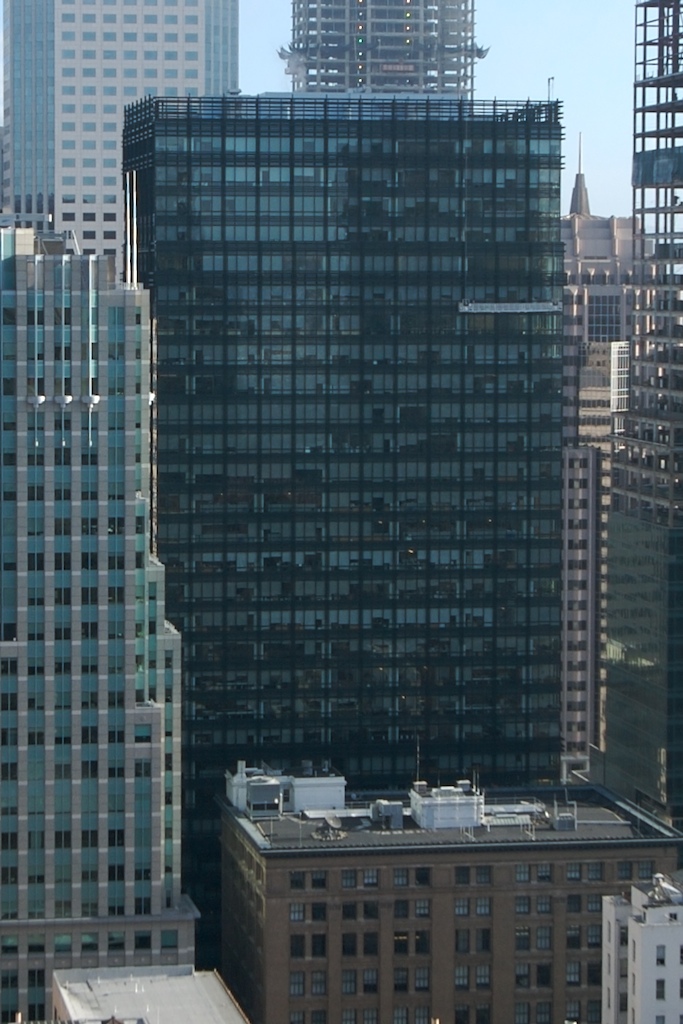
JPMorgan Chase Building (San Francisco)
Office building in San Francisco, California.

San Francisco Transbay development
Redevelopment plan for neighborhood in San Francisco.
MIRA
MIRA is an urban residential development in the heart of San Francisco. Just blocks from the Bay Bridge, Embarcadero, and Rincon Park, the 400-foot-tall tower creates a welcoming new community in the evolving Transbay district and accommodates a wide range of units, with 40 percent designated below market rate. The design responds to the need for dense housing in San Francisco and offers new models of sustainability, all while reinterpreting the city’s architectural traditions. It evolves the classic bay window, a familiar feature of San Francisco’s early houses, reimagining it in a high-rise context. Twisting incrementally over the height of the tower, the bays offer ample views, natural light throughout the day, and fresh air, and also inform the building’s distinctive form and texture—the result of special attention to the building’s energy performance and how it is experienced. At street level, the bays greet pedestrians with a human-scaled texture and serve in place of awnings to protect retail storefronts and residential lobbies. Market-rate and affordable condominiums are integrated throughout the tower and the adjoining podium and townhome buildings, with a central courtyard, roof terrace, and shared amenity spaces connecting all residents. Extending the inhabitable spaces within and offering platforms from which to view the city at all angles, the bays make every residence a corner unit. A sophisticated curtain wall facade system allows the bays to be attached to a repeatable structural slab from inside the building, reducing the need for a tower crane on site and limiting energy consumption and neighborhood impact during construction. The bays allow for a high-performance facade that is 51 percent opaque without inhibiting nearly 180-degree-views in every unit. The high-performance facade, along with an innovative VRF cooling system, allows the building to exceed ambitious California Title 24 energy standards. This, along with a state-of-the-art graywater harvesting system, green roofs, and high-efficiency fixtures, awarded the project LEED Gold certification.

Get optimized routing, transit times, and turn-by-turn directions.
Open in Atlas MapFrequently Asked Questions
How long does the San Francisco architecture walking tour take?+
The self-guided walking tour covers approximately 12.2 km with 9 stops. Allow approximately 6 hours including 20 minutes of viewing time per building.
Is the San Francisco architecture tour free?+
Yes, this is a completely free self-guided walking tour. You can view the route on the interactive map, export it to Google Maps for navigation, and explore at your own pace.
Do I need to book the San Francisco architecture tour in advance?+
No booking is required — this is a self-guided tour that you can start at any time. All buildings can be viewed from the outside. For guided tours with expert commentary, we recommend checking GetYourGuide for local architecture tours.
What is the best time to do the San Francisco architecture walking tour?+
Morning light (before 11am) is ideal for photography of building facades. Weekdays tend to be less crowded around commercial buildings. Allow a full half day for the complete tour.