
The computational reclamation of London's heart—a traffic hazard turned into a grand urban stage through Space Syntax logic.
Trafalgar Square ( trə-FAL-gər) is a public square in the City of Westminster in Central London. It was established in the early 19th century around the area known as Charing Cross. Its name commemorates the Battle of Trafalgar, the British naval victory in the Napoleonic Wars over France and Spain that took place on 21 October 1805 off the coast of Cape Trafalgar. The area around Trafalgar Square has been a significant landmark since the 1200s, as distances from London are measured from Charing Cross. The King's Mews occupied part of the site until the reign of George IV, who moved them to Buckingham Palace, allowing the area to be redeveloped by John Nash. Progress stalled after the death of Nash in 1835, and the square did not open until 1844. It is faced by buildings including the National Gallery, St Martin-in-the-Fields, Canada House and South Africa House. The square also contains several pieces of public sculpture, including the 169-foot (52 m) Nelson's Column in the centre, which commemorates Vice-Admiral Horatio Nelson's victory at Trafalgar; an equestrian statue of Charles I; and the fourth plinth, which since 1999 has hosted a variety of artworks. The square has been used for community gatherings and political demonstrations, including Bloody Sunday in 1887, the culmination of the first Aldermaston March, anti-war protests and campaigns against climate change. A Christmas tree has been donated to the square by the government of Norway since 1947 and is erected for twelve days before and after Christmas Day. The square is a centre of annual celebrations on New Year's Eve and was known for its feral pigeons until their removal in the early 21st century.
Featured in Zaha Hadid Architects's definitive monograph, ZHA: Redefining Architecture & Design.
Visitor Guide
Stand on the new North Terrace (the 'plinth' of the National Gallery) at dusk to see the best views down Whitehall towards Big Ben—a space once occupied by a busy road.
The top of the grand central staircase, looking south past Nelson’s Column towards the elliptical roundabout at the Strand.
Public square; open 24/7. No cost. Universal access is improved by two new platform lifts connecting the square to the terrace levels.
The redesign was the first major UK project to use the advanced 'pedestrian movement model' developed at The Bartlett, proving that Londoners had previously avoided the center for nearly a century.
1 hour
Design & Structure
Foster + Partners used Space Syntax Laboratory's observation studies of 300 locations. The design was tested through dynamic computer modeling to ensure traffic flow and pedestrian safety balance.
Utilizes traditional York stone, granite, and cast bronze. Notably, the walls recycle historical 19th-century granite from the original North Terrace wall.
The innovation here is infrastructural: a signalized elliptical roundabout centered on the King Charles I statue, calculated to maintain traffic connectivity while pedestrianizing the north bank.
More by Zaha Hadid Architects
View all →
Port of Hamburg

Vienna University of Economics and Business
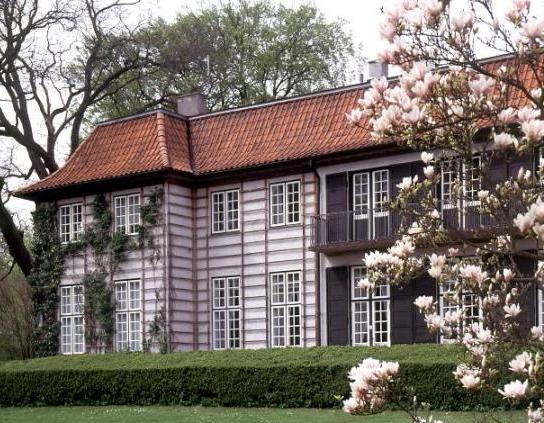
Ordrupgaard

Port Authority Building (Antwerp)

Contemporary Arts Center

St Antony's College, Oxford
Nearby in City of Westminster

Imperial Business School

British Library of Political and Economic Science

Serpentine Galleries

National Police Memorial (United Kingdom)

124 Horseferry Road
Frequently Asked Questions
Who designed Trafalgar Square?+
Trafalgar Square was designed by Zaha Hadid Architects and completed in 1840. It is located in City of Westminster, United Kingdom.
Where is Trafalgar Square located?+
Trafalgar Square is located in City of Westminster, United Kingdom. Its coordinates are 51.5081°, -0.1281°.
When was Trafalgar Square built?+
Trafalgar Square was completed in 1840. It was designed by Zaha Hadid Architects.
Can I visit Trafalgar Square?+
Trafalgar Square is a real building in City of Westminster that can be viewed from the outside. Check local information for interior access and visiting hours. Use the Parametric Atlas walking tour feature to plan a route that includes this building.