
Gaudí's dragon house — the roof breathes and walls shimmer with broken ceramics
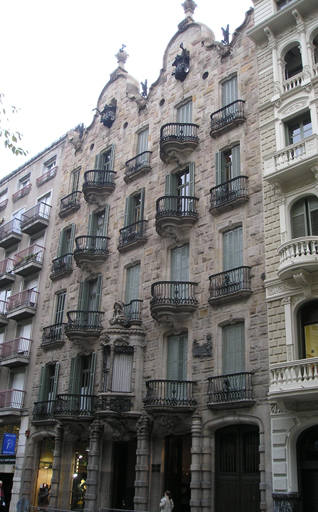
Modernist building in Barcelona.
Visitor Guide
The augmented reality experience on the premium tour is genuinely impressive — rare for a museum tech gimmick. The light well in the center is a masterclass in gradient color.
Street level from across the road for the full polychromatic façade. Inside, the central light well — Gaudí graded the blue tiles from dark (top) to light (bottom) to equalize daylight.
Open daily. Multiple ticket tiers — the full immersive experience is worth the premium. Book online to skip queues.
The façade represents St. George and the Dragon: balconies are skull masks, the roof is the dragon's spine, and the turret is St. George's lance. The bone-like columns on the ground floor gave it the nickname "House of Bones."
1-2 hours
Design & Structure
Gaudí used trencadís (broken ceramic mosaic) as both decorative and structural waterproofing. The organic forms were sculpted in plaster, then translated to stone by master craftsmen working without conventional drawings.
Sandstone façade, trencadís ceramic mosaic, stained glass, wrought iron. The famous colored glass discs in the windows were Gaudí's invention for diffusing Mediterranean light.
More by Antoni Gaudí
View all →


Nearby in Dreta de l'Eixample

Frequently Asked Questions
Who designed Casa Batlló?+
Casa Batlló was designed by Antoni Gaudí and completed in 1877. It is located in Dreta de l'Eixample, Spain.
Where is Casa Batlló located?+
Casa Batlló is located in Dreta de l'Eixample, Spain. Its coordinates are 41.3916°, 2.1649°.
When was Casa Batlló built?+
Casa Batlló was completed in 1877. It was designed by Antoni Gaudí.
Can I visit Casa Batlló?+
Casa Batlló is a real building in Dreta de l'Eixample that can be viewed from the outside. Check local information for interior access and visiting hours. Use the Parametric Atlas walking tour feature to plan a route that includes this building.