
Årstabroarna
Two parallel railway bridges between Årsta and Södermalm in Stockholm, Sweden.
Astoriahuset and Nybrogatan 17
Mixing old and new in the heart of Stockholm: Astoriahuset and Nybrogatan 17 consist of a renovated multi-story building from 1873 and the construction of a new connected office building. Astoriahuset and Nybrogatan 17 are located side by side in Östermalm, Stockholm’s historic city centre. Focus has been on uniting the existing with the new through form, materiality, and architectural details. Astoriahuset’s roof connects seamlessly to Nybrogatan 17 and emphasises the connection between the two buildings. It is a modern interpretation of the classic saddle roof, where the slope runs from a 45-degree angle into a vertical gable, adding a dynamic and distinctive motif to the new building. Sensitive restoration of Astoriahuset: Originally built in 1874, Astoriahuset stands directly next to the new Nybrogatan 17. The building, which previously housed offices and a cinema, has undergone a transformation that has brought the building back to its original function – residential apartments. Astoriahuset contains a restaurant on the ground floor and 18 renovated apartments spread over five floors. The apartments have undergone an extensive but sensitive restoration, with the historical expression being respectfully preserved. The former foyer of the cinema has also been restored and now serves as the entrance of the restaurant. The new addition – Nybrogatan 17: The new Nybrogatan 17 office building connects to the renovated Astoriahuset, located in Stockholm’s historic city district, Östermalm. The surrounding area played a crucial role in the design and choice of materials for the new building, as elements from local buildings were a significant source of inspiration. A unique hand-ironed brick was specially produced for the project and features a darker tone of clay to add a contemporary quality. Furthermore, architectural details of neighbouring historic buildings were reinterpreted as steel ornamentation in the new building. A flexible and future-proof office building: Creating a flexible office environment that can be adapted to future needs was one of the design team’s main focuses. Nybrogatan 17 offers both traditional office space and inspiring co-working environments that help promote communication and innovation, provide space for different ways of working and opportunities for spontaneous meetings. The heart of Nybrogatan 17 is the central atrium and its spiral marble staircase that extends the full height of the building. A glass roof over the atrium ensures that daylight flows into the building, with the staircase helping to create visual transparency, community, and cooperation between people in the building. The sculptural form attracts and encourages people to use the stairs and move around in the building and forms the basis for dialogue and informal meetings.
Växjö train station and town hall
Växjö train station and town hall One of the largest wooden buildings in Sweden The municipality, which profiles itself as a wooden town, has a history of building wooden houses and properties, and therefore it was a matter of course that the station would also be built in this material. The building has a wooden frame of cross-glued wooden elements and a column beam construction of wood. Inside the building there are many visible wood constructions parts, such as suspended ceilings, wall coverings, floors, and stairs. In the middle of the building there is a large and open space, where the wood creates a feeling of a warm welcome. High demands on materials and energy consumption The sustainability aspect has been a focus during the design which permeated the entire project. The new station and municipal building is certified, and meets the high demands on materials and energy consumption. From a life cycle perspective, wood is both economically advantageous and has a lesser climate impact. A public living room The building has an independent, central and solitary location in the city. The train station is placed at the entrance level and is connected to the railway bridge upstairs. The central parts of the building on the first two floors are open to the public around the clock: "Växjö's living room". This part consists of a large atrium with a glass roof. There are also large works of art hanging from the ceiling. A lot of light and wood characterize the public parts, with a visible wooden frame and a lot of wood cladding on the walls. Entrances to the municipal foyer and reception are located on the 3rd floor that can be reached either via the public space, or a separate staircase in the eastern part of the house. The municipality's premises are on floors 4 to 7. In the basement there are technology spaces, parking for service cars, and bicycle parking for all employees. The station is supplemented with shops, cafés, and restaurants. Glass and wooden facade The building's facades are characterized by the upper building body on floors 4-7, which consists of glass façades in different shades of grey and an accent colour. The glass facades are open, with sloping decorative glass. The outer walls to the north and east are made of wood, which are part of the wooden frame. The facade on the street level consists of classic wood panelling in both natural and dark colours. Solar cell panels are located on the roof.
Anima
When the traditional office building empties out at night, the goal of Anima is to contribute to the vibrancy of the street. The ground floor is open, transparent and public. Its spaces are flexible; for example, the gym can easily be converted into a conference venue. An attractive staircase in wood positioned centrally in the building inspires people to skip the elevator. More active individuals will find a climbing wall stretching from the ground floor to one of the rooftop terraces, which is visible from the square outside the building. Anima will be the center of Veddesta, where a new Stockholm neighborhood is emerging. The goal is to have a city block that contributes to well-being and an active lifestyle. The building has two levels that are tailored to the different scales of the surroundings. The tall section faces the city center, while the lower section faces shorter residential buildings. The two levels are united by a large terrace in the south, where everyone who works in the building’s office and co-working spaces can gather. The ground floor houses public spaces, including a restaurant, café and meeting venues, as well as an area that can be used for co-working. The flexibility of these spaces enables them to be used by one or several tenants over time. The design concept is a modern interpretation of the traditional “stone city,” with a distinct placement in the urban space. The building’s interior is reflected in the style of its façade, with a distinct base , body and crown. The ground floor opens up, with sections of pivot-hung windows. The surrounding park and square are brought inside the building’s ground floor, up the inviting staircases and out onto the terrace, to the rooftop setting, where greenery offers a contrast against the subtle red of the façade. Large glass sections reflect the surroundings in daytime, allowing the interior to shine at night. The glass sections on the top two stories are slightly angled, which changes the reflections and accentuates the crown of the building. The lower levels and office floors can be used either by one bigger tenant or several smaller tenants. The dynamic interplay between different functions will attract people outside of business hours as well, contributing to a safe, thriving city.
Architecture Firm Stockholm Office
The new office is located in Hagastaden, a vibrant neigbourhood close to Stockholms city centre in an old formar Factory from 1934. From the entrance, the visitor encounters a welcoming and dynamic ”Arena” with an exhibition space, inviting touchdown workstations, sofa groups, ping pong table, a long group table, an open kitchen, and a library. Instead of a traditional reception, we have a mobile host who welcomes and guides our guests. The Arena also works well for larger events and is big enough for the whole office to congregate with two drop down projector screens enabling presentations. A large skylight sits above the long group table. The sides of the deep recess are clad in polished stainless steel with a soft rippled structure that spreads daylight throughout the space. In the open kitchen there is a surprise for our visitors. On first inspection the backsplash appears to be a mirrored surface but on closer inspection is revealed to be a window into a large, enclosed kitchen space where the sink and taps are mirrored with the open kitchen in the arena. From the arena the visitor next encounters a large wooden pavilion clad in plywood with a black linseed oil stain. A large picture window reveals the inner workings of the model workshop with a skylight washing the interior with daylight from above. Meeting rooms and ancillary spaces enclose the arena and inhabit the inner space of the deep floor plan while the open plan workspaces wrap around along the exterior wall with good daylight distribution. The office is adapted for an activity-based work approach and divided into zones that offer rooms and environments for all types of work. Workstations are flexible, allowing for different groupings and work styles at different times. To maximise ceiling height and reveal the vaulted column capitals of the building’s robust industrial structure the technical installations are exposed. The underside of the concrete slab is covered with wood wool tiles for sound absorption. Everything above 2.6m over finish floor level is spraypainted pink in the open plan areas as well as a large flexible multi-function room. The other meeting rooms are predominately green with lime washed walls and linseed oil-stained plywood cladding. The design incorporates multiple sustainable and WELL features; repurposed materials and furniture, natural colours and materials, biophilia, reused and new modular industrial shelving systems which are flexible and easy to adjust for future needs. We also have a well-equipped gym to promote exercise both during and outside working hours. We see our new office as a lively and experimental workshop that prioritizes co-creation. To encourage the spread of ideas and knowledge we have used every opportunity to make it easy to physically display work-in progress. Lots of wall space fitted with metal strips and magnates for displaying drawings and layout space and shelves for presentation of models and material samples. Even the toilets have an original architectural or landscape sketch hand painted on the walls to inspire our creativity.
Folke Bernadotte Bridge
Folke Bernadotte Bridge is an important walking connection over Djurgårdsbrunnsviken, joining the northern and southern part of Djurgården, between the Museum Park and Rosendals castle. As early as 2004, The Royal Djurgården Society took the initiative to investigate the opportunities for a bridge in this location where Karl XIV Johans floating bridge (1820-1846) and a temporary pedestrian bridge that was built for the Stockholm exhibition (1930) have historically been positioned. The south part of Djurgården is one of Stockholm's most popular areas and the most visited within the Royal National City Park. Both locals and tourists go there to experience the nature and the various cultural sights. Stockholm is increasingly growing, necessitating increased access to green areas. Today, the accessibility to the generous nature area in the south part of Djurgården is limited and unequally distributed. A new connection over Djurgårdsbrunnsviken will enable people to easily reach the south part of Djurgården without depending on taking the car or bus. The design of the bridge grew out of a careful analysis of the site and surrounding landscape, the movement patterns on site and the historical context. The main idea was to span over the entire bay in a single leap, without making a large and tall construction in the delicate historical landscape. This could be achieved through a three-span, vaulted beam bridge, where the end spans are very short and the middle span extends over the entire width of the water. In accordance with maritime traffic requirements, the bridge has 3 meters sail-free height, same as the adjacent bridges. Supports and abutments are in concrete and hidden under the ground, making the bridge look like a single arch over the water. The beam structure is designed as a truss of stainless steel that provides transparency and lightness in its expression. The construction type is modern and effective, but it also makes a reference to the older bridges in vicinity, which with their truss constructions from the 19th century were the 'high tech' of their time. The bridge is a small construction in the wider landscape, but it has a great appearance in the narrow context. The rounded, slender trusses allow the light to permeate the bridge construction, generating captivating light patterns that change throughout the day. The open construction of the bridge minimizes its visual intrusion in the landscape. With the abutments hidden under the ground, the bridge connects smoothly to the surrounding walkways. Minimal railings with a stainless-steel mesh allow generous outlooks from the bridge and are almost invisible from the surroundings. The handrails have low mounted light fixtures that illuminate the wooden deck of nontreated spruce. The new bridge is a contemporary expression in the historical context, and it also adds a new time layer to the nearby older bridges.
Järvabadet
A new outdoor public swimming facility aiming to increase swimming skills in the Järva area in Stockholm and creating an inclusive meeting place for everybody have opened on the summer 2020. The pool area contain two practice pools, a swimming pool and a children’s splash section. In addition, there are changing rooms, staff rooms, technology buildings and a kiosk. The pools are a commissioned by the city of Stockholm, situated next to Eggeby farm, which is also owned by the city of Stockholm and leased by the cultural organization Järva Folkets Park. On the farm there is a nature school, a café and various events and festivals are regularly organized. The idea is that the bath will strengthen Eggeby farm as a meeting place. The area known as Järvafältet is a cultural reserve so a great emphasis has been placed on creating an architecture that in scale and form naturally fits into the environment. At the same time, we want to create a building of a public nature that clearly differs from the surrounding farm buildings in terms of, among other things, materiality. Keeping the focus on transparency for the staff, equality and safety for the users has been very important during the design process, which took place in close dialogue with the client. Plans for an outdoor swimming pool at Järvafältet have existed since the 70´s when the construction of the million program began. It was during this time period that the districts Tensta, Rinkeby, Akalla, Husby and Kista emerged. In the districts around Järvafältet live many socio-economically weak groups with low incomes and high sickness rates. The districts’ average income is among the lowest in the whole of Stockholm, which means that the children and young people who live around Järvafältet have few opportunities to participate in various leisure activities, travel away during the school holidays and learn to swim. We are very happy to work with and realize this project, which we believe will make a big difference for the residents in the districts around Järvafältet. In the project, we collaborate with LAND landscape architects.
Midsommarkransen Elementary School
By converting and adding to a former fire station from 1940, a new elementary school for 1000 pupils has been built in the Stockholm suburb of Midsommarkransen. A schoolyard with a playground inspired by hexagonal forms found in the existing building, and areas of kept natural landscaping has been created on the premises bordering nearby Enbacken Park, allowing for shared use between the two. With the former fire station being of historic value it has been of great importance to celebrate its architecture and allow for its main façade facing the street to continue to be a well recognizable landmark in the local context. The ground floor, previously used as a parking garage for the fire vehicles, has now been carefully converted into a captivating dining hall for all pupils of the new school, while the upper floor has been converted into pre-school spaces. The firefighter’s pole and the hexagonal opening connecting the two floors are kept intact. Situated ‘behind’ and connected to the former fire station is the addition of a new five-story building. A compact volume allowing for teaching in well thought through classrooms, complemented by an old oak tree and a forested area to be kept on the site. Two large stairwells and full height spaces ensure for a sense of community and natural light to be present throughout the interior of the school. The basement features a multifunctional hall for movement and play, and the metal clad top floor presents itself as a lighter and smaller volume with access to an outdoor terrace. The sand-coloured concrete façade of the new building stands in playful contrast to the red brick façade of the old fire station – creating a dialogue between the two structures. Taking on its role as an important addition to the Midsommarkransen area, the façade has been designed with a characteristic relief expression, enhancing depth as well as shadow and light. Two clearly articulated entrances (with a built in over-sized clock and a bench for hanging out with friends) are situated at opposite corners of the building, inspired by the distinct expression of the former fire stations front façade yet signaling the new use of the site as a school and schoolyard playground.
Sustainability House at Campus KTH Royal Institute of Technology
Sustainability House at Campus Royal Institute of Technology The “Sustainability House” (Hållbarhetshuset/KTH 43:25) adds office space and a new small green park area in the heart of the Royal Institute of Technology (KTH) campus Stockholm, Sweden. The building was recently awarded with first prize for Façade of the Year-prize (Årets Fasad by SPEF). KTH, founded in 1827, is the highest-ranking university in Northern Europe in the field of engineering and technology and attracts students and researchers from around the world. The main campus buildings designed by architect Erik Lallerstedt were completed in 1917 to 1931, decorated by prominent early 20th-century Swedish artists. The KTH motto is Sci-ence & Art, the whole campus has high cultural historical value and is protected by law. The campus was in dire need of more office space. Since it is located within the Royal Na-tional City Park, green areas had to be preserved and space in the city plan was very lim-ited. AIX chose to place the house on the street adjacent and transform the car park into a green campus yard. Though the volume of the building is quite big, it is perceived smaller in size due to its polygonal shape. AIX wanted to achieve a contemporary expression inspired by the older buildings on cam-pus. The facade consists of a brick wall, built on site, with a relief to half a bricks depth. The brick comes from Haga Brickworks (now Wienerberger) in Enköping, Swedens last remaining brick manufacturer. The windows are placed at another half of a brick’s depth which enhances the relief of the facade further. The setting of the windows has a slight variation to give a liveliness to the facade. Each room has one narrow window without ex-terior sun shading to ensure a sense of openness. In the entrance hall, which is shared with the neighboring house, the brick wall enters the room in an organically growing pattern. On the green roof there are solar panels. The building consists of five floors plus basement, the width varies between 17-22 meters, adding to a total 5,650 m2 of flexible office space. The entrance floor includes meeting rooms for conference, training and events. The upper floors contain workplaces for the insti-tutions for sustainable development, environmental science and technology as well as real estate and construction. All plans can be adapted to changing needs for the future. The house was classified Gold by the Sweden Green Building Council in 2017.
Telefonplan Hall
In Stockholm, a sports hall is replacing the existing one between the Västberga School and the soccer and athletics field. The existing hall was not suitable to play games in the juvenile leagues, there were only two changing rooms and was not accessible. The hall is built in the same place but due to its small dimensions, the program is divided into two levels. The ground floor area necessities were a bit too big, and the hall got too close to the running track. That is why one corner of the building has been rounded inwards, offsetting the track. In the ground floor, there is the hall with a coffee shop, the elevator, offices, changing rooms and the technical areas. There are eight changing rooms, four of them have external connection with the soccer field. The space in the middle of the building works as a gathering area, the central square, with the main stairs used as scene for award ceremonies. This square is visually connected to the field through a big window. Upstairs is the main sport hall located with storage rooms and a stand for public. As the area for the hall and its storage rooms was bigger than the ground floor, this creates shelter to the different entries. The interior concept is based on nature inspired materials and colorful surfaces. As the hall will be used mainly by young people, it is important to use materials that can take a high grade of vandalism. The interior walls of brick are kept unpainted and so is the few structural concrete walls. The toilets and shower rooms have tiles in two tones of the same color, to help people with visual disabilities. The floor is made by ceramic tiles that combines white and grey tiles, with turquoise ones to give a more cheerful character to the hall. The benches and the window ledges are made of pine plywood and so is the acoustic panel and stands in the sport hall. As nature is a recurrent topic in this hall, it seemed logic to choose a green sport floor. The ground floor has a brown-reddish brick facade, matching the facades of the area. The upper volume is covered with timber ribs in two different depths. Two big horizontal openings are made of polycarbonate panels, which filter the day light towards the inside of the sport hall and lightens up the building outside in the dark winter months. The main structure is made of glued laminate timber. Big pillars of glulam rise from the fundaments of concrete. A secondary structure of metal pillars is placed in the ground floor, independent from the main timber one. Some concrete walls are added in strategic positions to add stability. Solar panels provide with electricity. The hall has also an artwork integrated on the western façade. The artist duo Cecilia Aaro and Matilda Fahlsten, starting from the building's architecture, have created a pattern in gold-colored sheet that conveys the feeling of energy and movement.
New Karolinska Solna Project
New Karolinska Solna project Building the hospital of the future with a Scandinavian design approach With an ageing hospital not fit for the demands of a modern healthcare service, Stockholm County Council wanted to create a new facility that would give their patients an improved experience and better support interdisciplinary collaboration. The New Karolinska Solna project (NKS) not only needed to fulfil these healthcare requirements, but also needed to find place in the growing suburbs of Stockholm city. White Arkitekter won the competition to design the project. They joined forces with Tengbom to meet the complex architectural challenges of a project of this magnitude, creating a powerful collaboration between two architecture practices with a history of delivering successful civic projects. A therapeutic and clinical approach With architecture and design known to play a key role in delivering therapeutic and clinical outcomes the team uses daylight, outdoor greenery, colours and art to create a caring and easily orientated environment. A rich colour palette gives each building its own identity and daylight floods into the patient and treatment rooms that run along the facades, fostering wellbeing – a typical Scandinavian approach. On a clinical level, a safe and attractive environment is the main objective. All rooms are for single patient use and there is space for relatives to stay overnight. Materials and details have been carefully selected with their hygienic qualities in mind, as have logistical decisions such as using separated flows for the transportation of goods. These therapeutic benefits are enhanced with one of the largest public art investments ever made in Sweden. Artists created their pieces in close collaboration with the architecture and interior design concepts to create sculptures, paintings and objects that help patient recovery and provide attractive spaces for staff and visitors. Putting people first To deliver these benefits it was important for the team to put the people who would gain the most first – the patients. The design considers how they use the space to create a facility that respects privacy, promotes comfort and ensures safety. The light, airy, single-occupancy rooms come with an en-suite bathroom and can accommodate an additional bed for relatives or friends to stay over, which all help to encourage recovery. The rooms are big enough to allow the clinical teams to meet patients in private and medical equipment pales into the interior, with vital technical access points hidden in the bed-head panel. Beyond patients, the NKS project considers visitors and professionals, providing them with high-quality public meeting spaces inside and out that use Scandinavian and sustainable materials in a timeless manner. A city hospital with new opportunity for collaboration For staff the new flexible design brings together specialist clinicians in thematic diagnostic and treatment units covering cancer, cardiovascular, neurological, inflammatory, reparative medicine and paediatric/obstetric care. The general structure with its thematic organisation encourages interaction with colleagues across disciplines to reflect a patient focused interdisciplinary healthcare approach. The project is a part of an urban development plan that will transform Stockholm into a leader in life sciences. The location binds together other knowledge hubs within natural science and technology to enable greater co-operation. An evolving space This focus on the future extends to keeping up with the pace of change in the modern world. The design embraces flexibility so that the facilities can meet the healthcare demands of today as well as being fit for purpose in several decades time. The building is designed to be rebuilt and evolve. A general structure enables flexible and generic ways of working. Floor to floor height reflects the requirements of future medical equipment. While the width allows adaptable usage with advanced treatment methods and inpatient wards sited in the same building. Sustainability inbuilt This ability to reconfigure reduces the need for large refurbishment, bringing a layer of sustainability to the project. Hazard free building materials adds another layer. As do energy-efficient windows and facades plus needs-based lighting and ventilation. All this adds up to a super energy-efficient building that uses half the power of comparable hospitals. This multi-layered approach to sustainability led to the project receiving LEED GOLD certification and Gold in Environmentally Classified Building standard (Miljöbyggnad Guld). And the sustainability credentials are not limited to the building itself but also includes a social dimension. Outside, green space connects the hospital with its surroundings, making it easily accessible by bicycle or on foot and a tenth of parking spaces have an electric car charging post. Finding place in the wider landscape And it’s outside where NKS really finds its place as part of a wider urban design project. Before, the facility was cut off from the growing city centre by a multi-lane highway. Now, the road has been decked over and an entirely new neighbourhood links the hospital with downtown Stockholm. A subway station with direct access to the main entrance is under construction and will further improve connections. While proximity to institutions like Stockholm University, The Royal Institute of Technology and Stockholm School of Economics help to realise the vision of becoming a leader in life sciences. At 12-storeys high, the new building stands above the current skyline. But as the new district takes shape it will blend into the denser and taller building infrastructure. This is no sleeping suburb. The urban development includes residentials in combination with life science hubs to create a vibrant, living community. From its carefully thought out interiors to its strategic location in the Stockholm landscape, the New Karolinska Solna project, providing Karolinska University Hospital with new buildings offers opportunities for integrity and interaction as well as addressing the demands of future hospital design.
Profilbyggnaden
Urban strategy The process behind the building starts from the needs identified in the site´s urban context and streetscape. Located in an underdeveloped area of Kista, the building´s design is guided by its role within the urban fabric and its responsibility towards the regeneration of the city. Following this, the building serves as a backdrop for the new urban park and helps define the streetscape along Dalviksgatan behind it. In doing so it reinforces the urban fabric´s continuity between Grönlandsgatan, the proposed Hörnparken and the areas future residential streets. Understanding the city as the physical expression of a society´s common construction, the building is conceived first as the setting for social play and then as a building as such. The choice of activities to be hosted responds to the criteria described previously. The public functions at street level aim at providing the area with a new public destination and profile while the residential on top will kickstart the site's repopulation and its conversion from a 9 to 5 office area into a mixed use 24/7 neighbourhood. The residential areas are designed with a great level of flexibility in order to adapt to different types of accommodation: at an early stage including hotel/long stay rental whilst having the ability to change into condominiums once the area is fully settled as a residential neighbourhood. Building design The design process is based on the following core intentions; Reinforce the cooperation and dialogue between the building and the park. Generate a strong public destination to serve as a catalyst for the entire Isafjord area. Provide the building with a strong public pavilion in park character. Find a unifying expression in order to avoid a more traditional residences on top of a podium typology. The generous floor height at the lower levels is intended to provide the building with a strong public character. A double height space facing the park connects both public floor plans. Combined with an open transparent façade treatment this generates a fluid dialog/transition between indoor and outdoor spaces further reinforcing the connection between the building and the park. The total integration between park, public terraces and market hall encourages visitors to freely use and appropriate the spaces at ground and first floor level. The floor plan at these lower levels is shaped following the pedestrian flow between Grönlandsgatan and Kistavägen´s residential façade strengthening the building´s role as park´s backdrop. A public roof terrace reinforces both the open public character of the building and its appropriation by the users. Continuous balconies towards the southeast, facing the park, protect the apartments´ glassed façades and build on the connection between the indoor spaces and the park. These balconies, together with the outdoor hallways facing Dalviksgatan, provides the building with the desired lightweight, pavilion-like expression. A set of repetitive vertical wooden ribs support these balconies and hallways at the same time as they generate the desired continuity between the public lower levels and the residential ones on top. At the rooftop, the ribs provide shading for the shared outdoor spaces as well as enclosure for the indoor activities. Besides improving the building´s passive performance these balconies and hallways will provide the necessary space for residents to be able to grow their own plants and flowers. Together with the common green areas at the rooftop and on top of the market hall these “private greens” will generate strong synergies with the park in front and boost the biodiversity at the site. Finally, the building meets the sky mirroring the way it settles on the ground by incorporating the plan´s arched shape into the facade. The building´s changing height responds to its´ location, gradually lowering from the urban scale at Grönlandsgatan towards the smaller residential scale of Hörnparken and the inner residential streets. Kista´s location within Västerort gives the area an important role in the connection and integration of otherwise secluded suburban areas. Together with several public facilities already planned and in place in Kista, a building with these characteristics, plus the relation and synergies it can generate with the park in front, will not only help reactivate and rebrand the area itself but will potentially become a destination for the inhabitants of Västerort. Materiality The chosen materiality is a direct consequence of the search for a transparent, lightweight / pavilion-like expression and the strong link between the building and the park. Linear laminated wooden elements are combined with wood and glass panels in search of a welcoming public and warm character. These choices seek to completely integrate the building into the park in order for it to be perceived as an approachable extension of city´s public realm.

Swedish Centre for Architecture and Design
Architectural museum in Stockholm Sweden.

Moderna Museet
Modern and contemporary art museum in Stockholm, Sweden.
Nationalmuseum
Wingårdh Architects and Wikerstål Architects were jointly commissioned to plan the comprehensive renovation of Nationalmuseum in 2012, and the following year the building closed for the start of construction. The project brief was to create an enduringly functional museum by • reclaiming opportunities for daylight and views to the exterior; • reclaiming for public use several areas that had previously been used for internal activities; • improving the logistics through alternative circulation patterns for the public and separate and secure routes for the art; • replacing and augmenting all technical systems—the middle level had no climate control system at all and the upper level needed a new one; and • achieving all these enhancements with respectful consideration for the building’s architecture and cultural historical value. Our work with Nationalmuseum has oscillated between identifying self-evident opportunities and discovering unexpected ones, though the self-evident dominated the design. Most of Nationalmuseum’s new design is derived from the painstaking work of the building’s original architect, Friedrich August Stüler, and the lion’s share of our work has been to ensure we meet the new technical and operational requirements while remaining true to the building’s own inherent qualities. Because the Nationalmuseum building was conceived for a variety of different uses, over time it accumulated layer upon layer of compromise. By the end of the twentieth century, it was badly worn and the floor plans had become haphazardly configured. International demands to provide more secure and stable conditions for the art ultimately made the need for a thorough renovation urgent. Our first challenge was to resolve the logistics. Visitors and artworks both now move along new circulation paths. The floor of the basement level, which had previously been a low-ceilinged space that was largely filled by pipes and wiring, has been lowered to make room for bathrooms and a coat check. These are reached by two new staircases, one of which is clad in the renovation’s characteristic finish: patinaed brass, a material with the ability to harmonize with the museum’s warm and soft character. Art and visitors alike can be transported in spacious elevators, the largest of which holds ninety-seven people. Our preliminary design called for adding elevator shafts to the exterior, but that solution was scrapped for reasons of conservation as well as logistics. Instead we chose to allow the elevators to occupy space inside the south atrium. The space had not been uncovered until the renovation, and was therefore a more reasonable place for the addition of an elevator shaft. It looks like a freestanding object that could be removed if desired—and in fact it could be removed. It is wrapped in a weave of patinaed brass, a choice we think Stüler would have appreciated. Treating this lighter and more temporary sheathing (in contrast to the building’s heavy, permanent walls) as a building component with its roots in weaving was an idea that emerged at just the same time Nationalmuseum was formed. The elevator shaft’s kinship to the new mechanical building recently constructed in the museum park is acknowledged by giving both a similar woven cladding. These two structures are our most visible additions. The relief in the surface of the mechanical building’s prefabricated concrete panels is only thirty millimeters deep, but it is effective in its precision. The lower portion of the elevator shaft can be opened on the sides to reveal a large video screen that can transform the atrium into a lecture hall. Both of the atriums are lit from above by vaulted glass roofs that are shallow enough to avoid changing the building’s silhouette. But a vaulted ceiling has the unfortunate attribute of focusing sound waves toward a point in the center of the space. In order to give the atriums the best possible acoustics, the glass roof structures are built up of many small pyramids. The faceted surfaces all but eliminate reverberations at floor level by redirecting sound waves to the surrounding walls, where they can be absorbed by a sound-attenuating stucco finish. This has made it possible for both atriums to host a variety of public events in a building whose floor area has been doubled. The neutral gray color of the walls enhances the quality of the incoming daylight, which benefits the surrounding gallery spaces as well. By raising the atrium floors 175 centimeters, we have achieved two things. First, we made space below for large mechanical rooms that also reach deep down into the bedrock. Second, we united the atriums with the building’s other public spaces. Together with the so-called “Church” in the center of the building, they now form a grand, contiguous space. This was made possible by lowering the floor of the Church 44 centimeters, restoring the lofty spaciousness that had been truncated in 1961 when the floor was raised 89 centimeters. We have added a restaurant, café, and bar in what are some of Stockholm’s most magnificent rooms—spaces that had formerly been used for things like conservation studios. Staff functions have been almost entirely relocated, allowing the whole ground level to become part of the life of the city. Here people can meet, drink coffee, read, or just enjoy sitting for a while without paying the entrance fee. The entrance loggia, too, has become more accessible: its function as an outdoor space has been restored, and because its floor is now flush with the adjacent indoor spaces, everyone can enter the building through the main entrance. Because the windows have regained their original significance on the interior, the art can be experienced in a new way. Daylight and views to the outside were long seen as threatening to both the art and the viewing of it. Today we have a greater appreciation for the role they play in visitors’ enjoyment, orientation, and experience of the art itself, and we now understand that daylight is not as damaging to older paintings as was once believed—the paint is actually most sensitive when the painting is new. In order to take advantage of the large windows without undermining the indoor climate or the lighting conditions, the interior windows dating back to the 1910s and 20s were replaced with steel-framed glazing that together with solar shades can satisfy the complex demands for security, solar heat gain, views, daylighting, and insulation. Another example of how earlier qualities have been reclaimed is the restoration of the upper-level floor plan. Almost a hundred years ago, Stüler’s intricate sequence of spaces was discarded in order to create a pair of large galleries. The fact that walking through the top floor, with the play of sunlight there, has become a more richly varied experience is a credit primarily to the original architect. What made it possible to reclaim its original grandeur, however, was the need to make room for the huge chases required for the new climate-control system. Besides a lot of space for ductwork, the system includes a great deal of radiant floor tubing that leads to custom-designed distributors, which are camouflaged as rosettes in the crowns of the vaulted ceilings—a high-tech detail that, like the Nationalmuseum as a whole, speaks to the potential for uniting reverence, innovation, function, and craftsmanship when all interests are aligned and pulling in the same direction. Gert Wingårdh Erik Wikerstål.
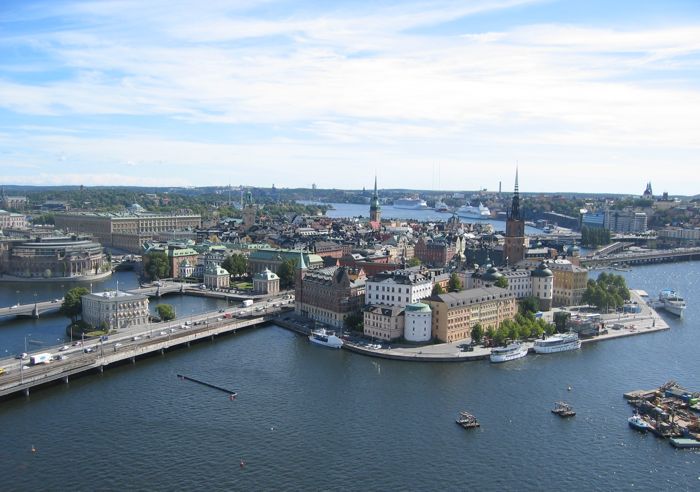
Kv. Grävlingen
The block” Kv. Grävlingen” is an office/mixed use building originally from the 1970s, which was heavily remodelled around the millennium to become a inaccessible bank premises. In 2014, it was time yet again for a major transformation. This time towards becoming an open, vibrant and people-friendly place more accessible to the public. In the years 2014-2018 Grävlingen transformed from a one tenant building to a building bustling with multiple offices, restaurants and shop activities. A non-descript building has been turned in to a destination.
TAKO
Restaurant Tako—A True Sensory Fusion Weaving together Scandinavian, Korean and Japanese influences into a seamless tapestry, Tako (which translates to dragon or octopus) was commissioned in 2016 by Stockholm Krogbolag—a seasoned veteran of the Swedish culinary and nightlife scene, with a renowned and uncompromising attention to detail. The resulting space transports the diner from a busy street in Stockholm to an atmospheric neo-Eastern speak easy. The physical space Tako occupies holds a special place in Stockholm's nightlife, having seen hordes of the city's well-heeled party goers visit its underground arches in its many former guises as a club and bar. In its newest incarnation, the music still plays but the main source of life comes from the carefully orchestrated menus, cocktails and the moody tones of the new interior architecture. For the architects, utlising the space's existing levels, nooks and crannies felt almost obligatory. Some of the interior landscape was lifted even further while other spots saw new fixed furniture and partitioning used, to enhance the feeling of curiosity within the visitor. Coupled with the absence of daylight, and the single entrance which immediately leads them downwards; it's a case of design informing and guiding the diners' experience of being in a far-flung land. A place of intrigue and surprise. Tako seats 180 guests without feeling congested or confined, with an intelligent use of levels and lighting to bring intimacy to the dining experience. Take its bar into account, and that number can comfortably swell to 300 without interrupting or hampering the activities of its staff. A diner will feel the pulse of the night, but without being able to count its beats. Precious Stone, Jewels, Warm Metal and Feel. Situated next to its sister restaurant, the classic Nordic eatery Vassa Eggen, Tako holds the kinds of culinary bounty Stockholm hasn't seen before. And the architects recognised that such a place needed to feel like an uncharted voyage into the unknown. By raising the walkways through the space, and utilising its existing levels they are able to generate the illusion of stepping into the backstreets of Tokyo, albeit one adorned with rich, textural materials like hand-chiselled stone, wood and raw concrete. Copper elements combine with expansive upholstery and earthy leather tones to bring a warmth to the space. Service Service Service. When dealing with a client so actively involved in the service industry, they bring a level of information which adds depth to a project. And with restaurants, the higher up you go, the more that's expected of the dining experience itself. The décor has to shine, to reflect the chef's intentions, and the service from the staff must also be faultless. When handled with care, it's possible for the architecture itself to support the role of the service staff in the diner's evening. The floor plan of Tako has been developed to allow for the chain of touchpoints to flow seamlessly from the kitchen hatch to table. While the positioning of the diners across multiple layers grants the servers many vantage points to monitor the progress of the diners themselves. Using mesh to partition off specific tables balances intimacy for the diners with practicality for those serving them. A Relationship of Trust. As previously noted, Tako's owners Stockholm Krogbolag are one of the most experienced restauranteurs in the business. And it's rare for them to relinquish the creative duties to such a level that the architects and interior architects can design a space holistically. In this case, the relationship between architect and client has existed for many years. With a pre-existing sense of trust, the owners are able to hand over the reins and know that stronger concepts will arise as a result. The Proof is in the Pudding “TAKO is a like an elegant friend with a twinkle in the eye. We want to create a social atmosphere filled with unique experiences and build our own dining culture together. The restaurant has a quirky twist and an element of surprise, without compromising on the utmost attention to quality,” says Kristofer Sandström, founder of Stockholm Krogbolag.
Forskaren
Forskaren is a new centre for health and life sciences, bringing together spaces for industry, research, academia, and the public in a striking new building. Sited prominently at the heart of Stockholm’s Hagastaden district, an emerging quarter for innovation and entrepreneurship in health and life sciences, the landmark building provides a centre of activity and a knowledge sharing forum for the whole district. By combining public and private functions Forskaren opens a door into life sciences helping to nurture a wider interest in the subject and inspire the next generation of scientists. At street level a fully glazed façade visually connects the interior and exterior spaces and invites visitors into the building. Accommodating a cafe, deli, restaurant, event spaces, and an interactive exhibition, the public ground floor is the social heart of the building where people from all backgrounds can mingle in a hive of activity. The interactive exhibition occupies a unique position at the nexus of industry and the public, providing a tangible link between the two typically separate groups and acting as a showcase for the life sciences in a ‘live’ environment. Internally, spaces are arranged around an impressive full-height atrium bringing daylight into the building and allowing visitors a glimpse of the activity above, further strengthening the connection between the public and industry. Upper floors contain flexible office spaces where tenants can choose to rent one or more floors, or simply take advantage of the co-working spaces. Recognising that innovation does not happen in isolation the workspaces are designed to bring people together, encourage collaboration, and facilitate chance meetings. Each floor benefits from a laboratory that is shared by both permanent and co-working tenants, and more informal spaces such as break-out areas, a rooftop terrace, and a sculptural staircase, further reinforce the collaborative atmosphere. Facilities for conferences and seminars also allow Forskaren to host industry events, to bring people together from the whole community and reinforce Hagastaden’s reputation as a world-leading district for innovation in health and life sciences. Pursuing the highest standards of sustainable design and LEED Platinum certification, Forskaren incorporates systems to minimise its energy and resource consumption. A bank of rooftop solar cells provide energy for building systems such as ventilation, heating, and cooling, while rainwater is collected and used for watering plants and flushing toilets. The internal temperature is regulated by a heat pump which utilises the energy stored in the ground below the building, helping to cool the building in the summer and heat it in the winter. The building is also designed to IWBI WELL standards, reflecting its commitment to providing exceptional workspaces that focus on occupant wellbeing. In this way, Forskaren stands as an exemplar of sustainable office design, not only for the life sciences but for workplaces of all types.
Get optimized routing, transit times, and turn-by-turn directions.
Open in Atlas MapFrequently Asked Questions
How long does the Stockholm architecture walking tour take?+
The self-guided walking tour covers approximately 7.1 km with 4 stops. Allow approximately 3 hours including 20 minutes of viewing time per building.
Is the Stockholm architecture tour free?+
Yes, this is a completely free self-guided walking tour. You can view the route on the interactive map, export it to Google Maps for navigation, and explore at your own pace.
Do I need to book the Stockholm architecture tour in advance?+
No booking is required — this is a self-guided tour that you can start at any time. All buildings can be viewed from the outside. For guided tours with expert commentary, we recommend checking GetYourGuide for local architecture tours.
What is the best time to do the Stockholm architecture walking tour?+
Morning light (before 11am) is ideal for photography of building facades. Weekdays tend to be less crowded around commercial buildings. Allow a full morning or afternoon for the complete tour.